Quick Summary: Years after a franchisee inspected their historic home, homeowners filed a claim against the home inspection franchise for allegations like water intrusion, pest damage, and broken windows. This home inspection claim case study highlights how your inspection agreement, awareness of additional insured vs franchisor endorsements, and proactive franchisee insurance can protect against expensive conflicts.
The following is a real home inspection claim from our archives. To protect the insured’s identity, all identifiable characteristics from this home inspection franchise claim—including names and associations—have been altered or removed.
You’re staying in an 1850s mansion near one of North Carolina’s downtown historic districts. The Airbnb offers a private, basement-level apartment just minutes from a scenic riverwalk and a short drive from local beaches. With pastel yellow siding and a white porch, it’s exactly the kind of quant summer vacation spot you’ve been looking for.
Then, on your first day, a freak storm drenches this port town with a whopping three inches of rain.
Sadly, the old house isn’t equipped to brave the storm. Water seeps into the basement bedroom you’re staying in, soaking your bag and everything in it. You spend the night helping the Airbnb host move furniture and clean the room. The next day, it happens again, this time while you’re away from the house.
What your Airbnb host doesn’t disclose is that it happened to another guest before you: an outside shower leaked water into the primary basement bedroom. Then the basement would flood again for another guest just a few months after you.
This basement water infiltration was part of a real series of events involving extensive renovations and repairs. And it started years prior with an inspection and a home inspection franchise.
Why did they blame their home inspector?
Section Summary: The buyers blamed their inspector for not warning them about the severe water intrusion, mold, and pest damage, despite the basement being largely concealed due to stored items. They tried to pin $371,000 in repairs on the inspector—or, in reality, the home inspector’s franchise.
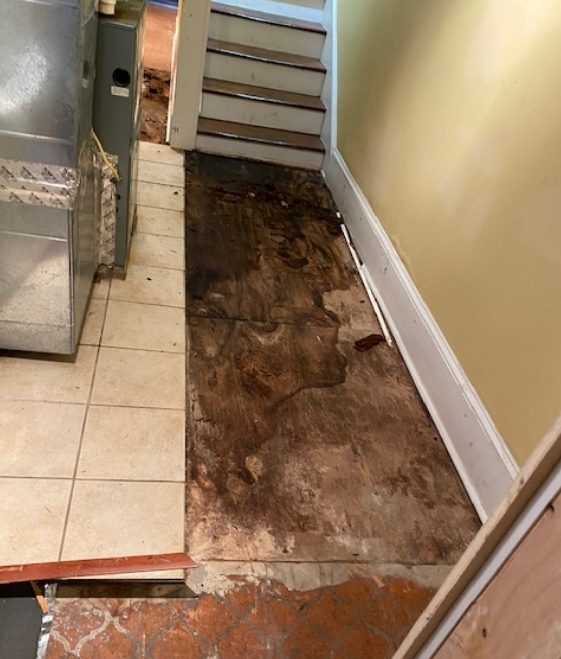
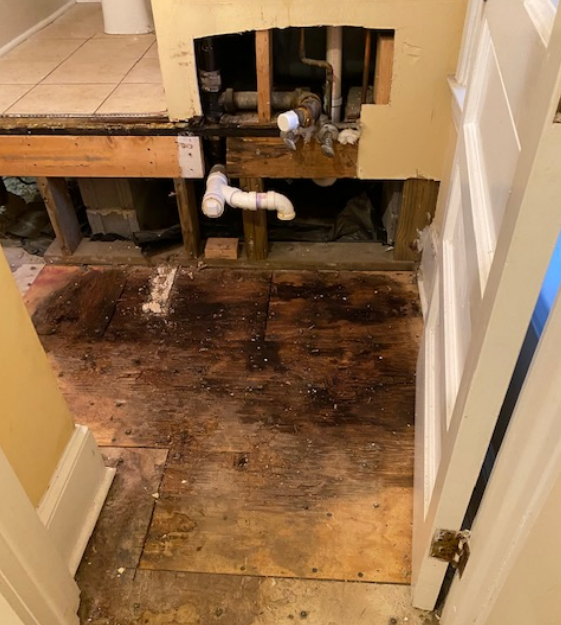
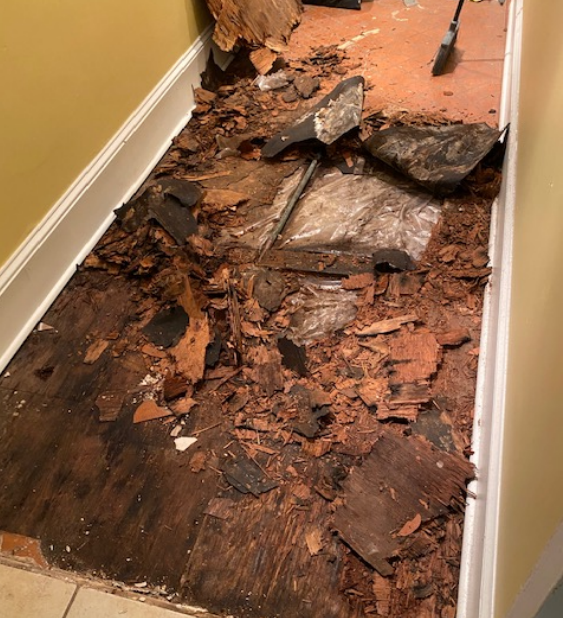
After multiple water intrusion events in the basement, the buyers had pulled up the floating floors. Underneath they found plywood that was so soaked, it pulled apart like mulch and made the floors cave in, almost like they were walking on a sponge. They also found visible mold.
To remediate the mold, the buyers tore out the walls, too, revealing that “entire sections of walls and framing … had been eaten away by termites.” Before long, they were planning a total reconstruction of the basement apartment.
Why hadn’t the inspector seen the mold and warned them about the water intrusion or termites? Why had he given an “all clear” on the basement, as the buyers claimed, if it was in shambles?
During the inspection, the inspector had significantly limited access and visibility in most of the basement. The previous owners had used it for storage. Though the inspector had looked at everything he could reach, there was so much furniture, clothing, boxes, and bags that much of the walls and floors were concealed. He’d noted this in his report and informed the clients that he couldn’t move anything.
Nonetheless, when they discovered the water intrusion within a year of closing, they were convinced the inspector was at fault.
The Buyers’ Demands
The clients’ main grievances included:
Water penetration, standing water, and water damage to the basement walls and floors.
Wall and framing termite damage.
Mold.
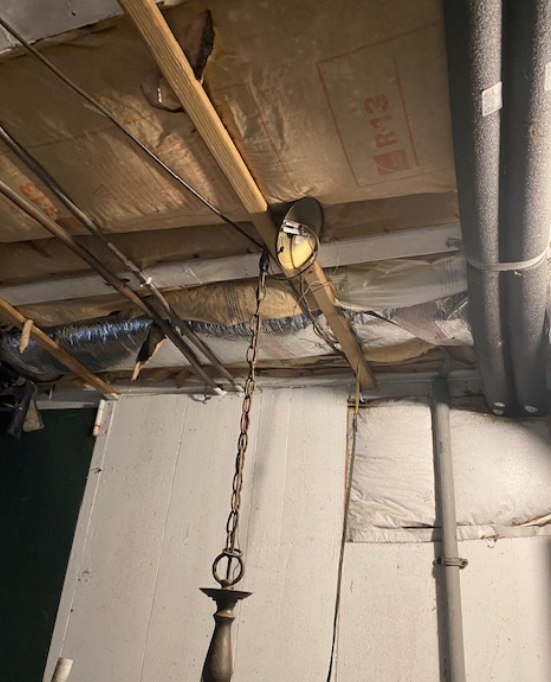
Improperly installed insulation.
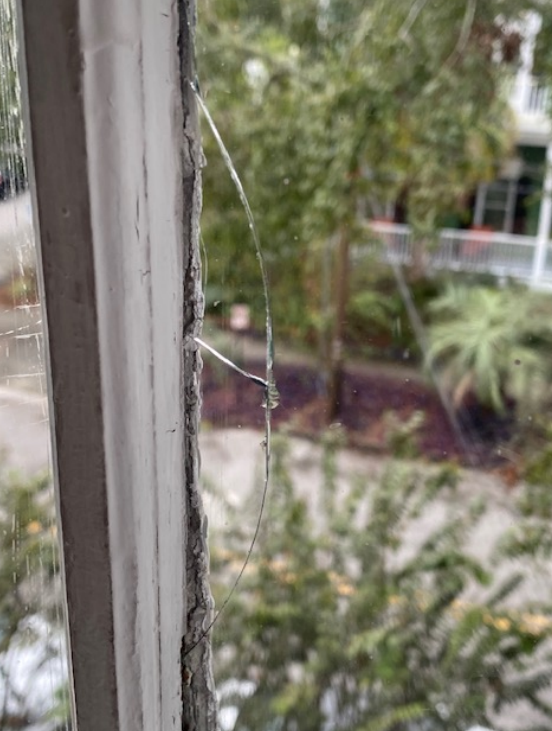
Broken windowpanes.
Broken ice maker.
Broken water filtration system.
German roach and moth infestation.
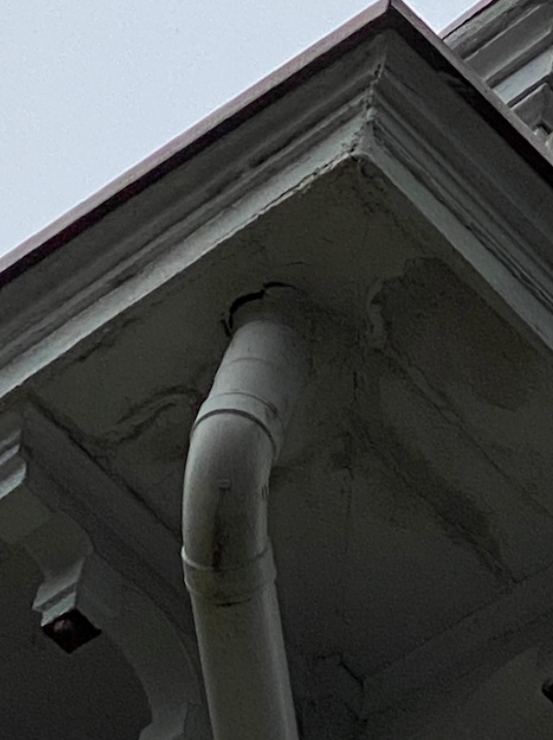
Broken and leaking gutters.
Rusted clothes dryer vent.
They originally demanded $25,000 to repair the water damage. But as the basement renovations progressed, their demand climbed to $118,000. After a few months, it escalated to $371,000—which included repairs totally unrelated to the water damage, like new lighting, furniture, and decorations for the basement kitchen, living room, bathroom, laundry area, and two bedrooms.
They wanted to use the space for an Airbnb again, and they expected the inspector to pay for it.
Image from the inspection clients of basement floors removed due to water damage.
Image from the inspection clients of broken window glass.
Image from the inspection clients of basement floors removed due to water damage.
Claimants’ image of insulation they accused the inspector of neglecting to report.
Image from the inspection clients of basement floors removed due to water damage.
Photo from the homeowners of a gutter downspout the inspector did not catch leaking, due to no rain during the inspection.
The Home Inspector’s Side
Section Summary: The inspector had limited visibility during his basement reinspection. Nonetheless, all his alleged errors and omissions had either been reported—like the water damage and elevated moisture levels—or disclaimed as outside his scope.
Fortunately for the inspector’s defense, the facts told a more nuanced story.
According to the clients, the inspector had returned to reinspect the basement after the sellers removed their belongings. That reinspection did happen, though the sellers had only removed belongings from one wall, meaning access was still limited.
And while the clients were upset that the inspector hadn’t seen the mold or pest evidence, they hadn’t actually paid for a mold inspection. They’d also canceled their wood-destroying insect inspection. Plus, his signed pre-inspection agreement stated he would not determine “the presence of pests such as wood damaging organisms (including termites), rodents or insect[s], rot/decay, fungus, including mold and mildew.” The broken ice maker, water filtration system, and dryer issues were outside his scope, too.
And not only were the subflooring, structural, and insulation issues concealed under the floors and behind the walls. But he also couldn’t have seen the gutters leaking unless it were raining during the inspection, which it wasn’t. In short, all these allegations exceeded what’s expected of a standard, limited, visual home inspection.
As for the water and window damage allegations, the inspector had thoroughly reported the following:
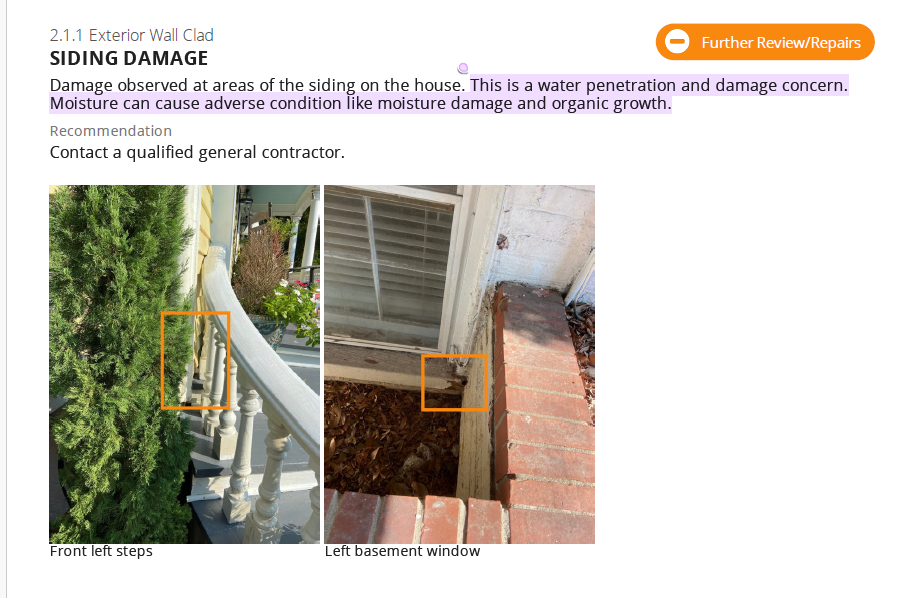
Siding damage, where he noted a water penetration and damage concern.
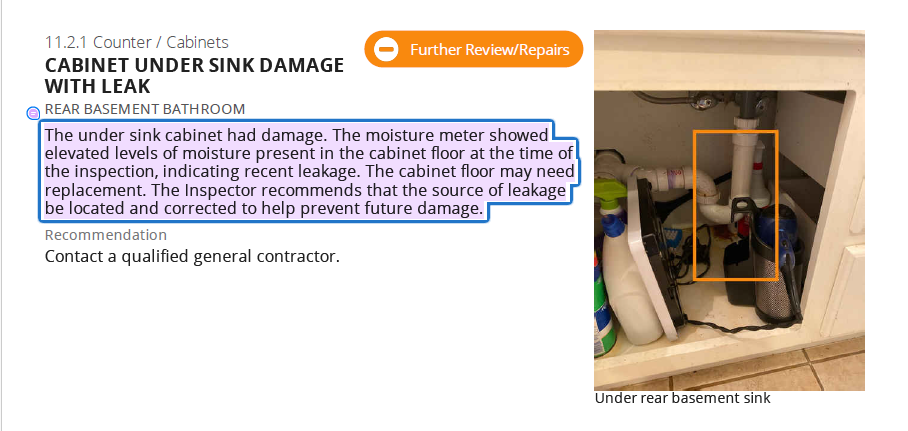
Elevated moisture levels and water damage under a basement sink where leaking had likely occurred.
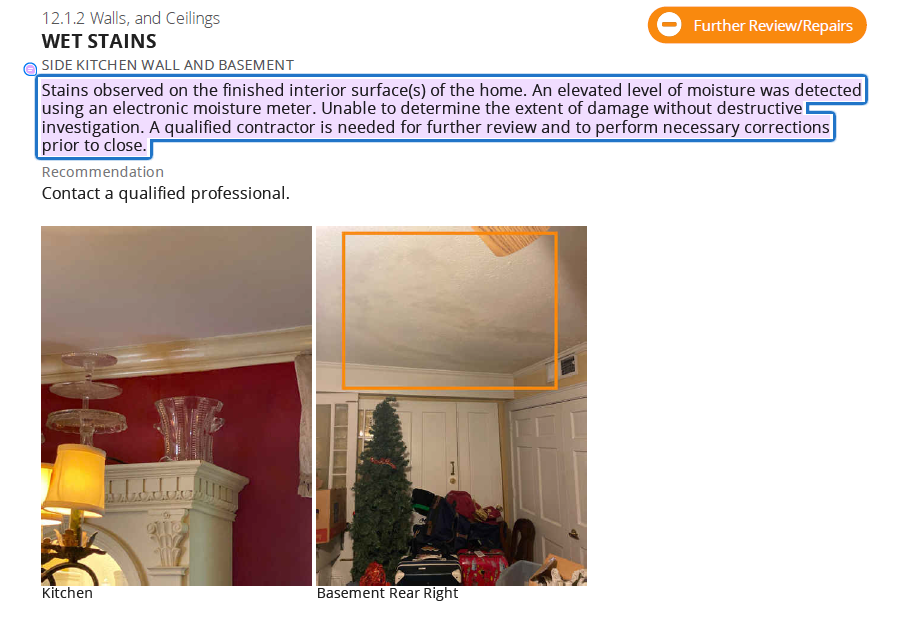
Elevated moisture levels in the basement walls, plus stains indicating water damage.
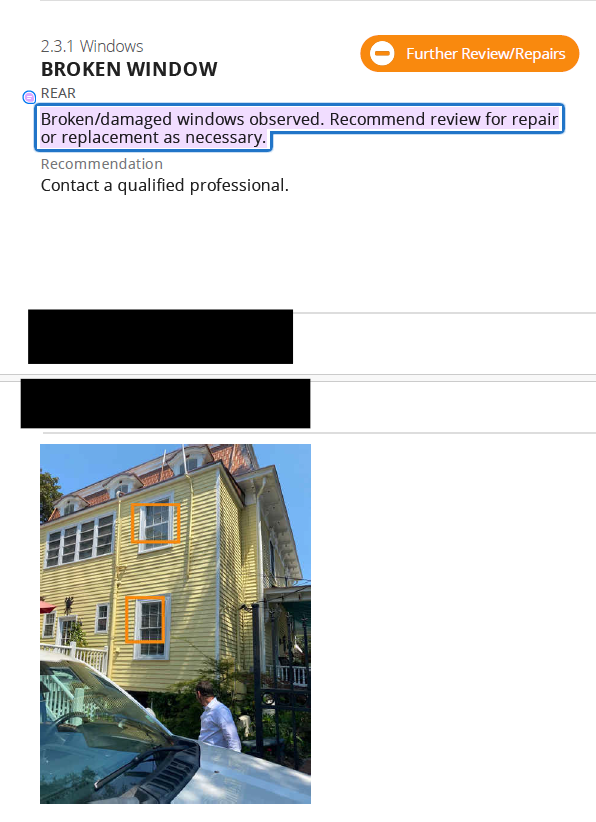
Multiple broken windows, with advice to consult a professional for repairs or replacements.
Photos From the Inspection Report
Click below to view the images in full screen mode. Identifying information has been redacted.
The Issue With the Home Inspection Franchise
Section Summary: The buyers filed the suit against the franchise’s corporate entity, who notified us, the inspector’s insurance provider. Some of his strongest pre-inspection agreement defenses included his statute of limitations and limitation of liability clauses.
There was one problem: He owned a home inspection franchise. The clients hadn’t named the inspector directly. Rather, they’d filed the lawsuit against the franchise’s corporate entity a year and a half after initially suing the sellers and the sellers’ agent.
That corporate entity informed the inspector, per the requirements of their franchise agreement. The claim had already progressed so much by then, however, that the clients had been deposed in litigation, meaning the claim was filed formally in court. (Learn more about the E&O claims process here.)
Our claims team got involved as soon as we were notified. One of their first moves was trying to get the house inspection franchise’s corporate entity voluntarily dismissed from the claim. They hadn’t performed the inspection, and the inspector’s franchise agreement didn’t allow the entity to be sued in the franchisee’s place.
How the Home Inspection Franchise Claim Was Resolved
Section Summary: The inspector and his home inspection franchise were tangled in a complex, multi-party mediation. The inspector’s part of the case settled for $15,000 and he paid a $1,750 deductible.
The clients waited nearly three years before filing a claim against the franchise’s corporate entity. They failed to include the inspector, and when he did find out, the claim had already progressed significantly.
This timeline is important because North Carolina has a three-year statute of limitations. The inspector’s pre-inspection agreement, which came from his franchise, shortened it even more—to one year from the date of the inspection. Because this timeline violated his statute of limitations for the home inspection lawsuit, our claims team could use it to argue that the inspector was no longer liable for the alleged errors.
Statute of Limitations Clause From the Inspector’s Agreement
His pre-inspection agreement also included a limitation of liability clause. If an inspector is found liable for an error or omission, this clause is designed to cap their potential liability to a set amount, like the inspection fee. His agreement limited his liability to $1,150 for the cost of his services.
Limitation of Liability Clause From the Inspector’s Agreement
North Carolina requires mediation before cases go to trial. In this case, mediation involved all the defendants, not just the home inspector. With multiple parties in one mediation, things got tricky.
The Settlement
Multi-party claims often invite more exposure, expenses, and stress. And if claims are not resolved in mediation, they can move on to even costlier stages of litigation, like trial. To minimize defense costs, defense counsels may face pressure to settle fast in global mediation.
That’s likely what happened here. Though our claims team wanted to settle for the cost of his inspection, the home inspector’s part of the case settled for $15,000. The inspector paid his deductible of $1,750.
You might be wondering: If the claim settled for more than the inspection fee, did the statute of limitations and limitation of liability clauses actually do anything to protect the inspector?
Yes. Even though $15,000 is much higher than the $1,150 inspection fee, it’s still considered relatively low for global mediation. It was also the max our claims team was willing to offer.
Challenging the clauses’ defenses would’ve been more difficult and expensive for the opposing counsel. The inspector and the clients would’ve faced higher defense costs, and the clients likely realized they had less to gain from fighting the provisions in court. Rather than continuing to push for the six-figure settlement they’d originally insisted on, they accepted the $15,000 offer.
While it’s more than the $1,150 fee our team had planned to settle for, the inspector still only paid his deductible.
The Outcome
Initial Demand: $371,000
Total Settlement: $15,000
Inspector’s Costs: $1,750
Status: Case closed.
Lessons for Home Inspection Franchise Owners
Section Summary: This home inspection claim case study reminds franchisees how important it is to have strong pre-inspection agreement defenses, know your home inspection franchise insurance requirements, ask about additional insured vs franchisor endorsements, and keep records of your inspection documents.
What can you learn from this home inspector franchise owner’s experience?
Here are four takeaways you can use to protect your own inspection business.
1. Your pre-inspection agreement defenses can make (or break) claim outcomes.
You can provide the highest quality inspection, take every photo, and disclaim every inaccessible space. But at the end of the day, it isn’t the quality of your inspection that determines your outcome in a claim; it’s the quality of your contract.
In this claim, the water, termite, and mold damage was concealed in the walls, under floors, or behind the sellers’ belongings. The inspector couldn’t have reported the broken ice machine, rusty dryer vent, or malfunctioning water filtration system, as they were all outside his scope. Also, contrary to the clients’ claims, he did document the high moisture levels, water stains, and broken windows—with photos to support his findings.
These allegations imply the clients didn’t read their report, at least not thoroughly. They didn’t see his photos of the broken windows or read his warnings about the moisture intrusion. Ultimately, what swayed the inspector’s case were the protective clauses in his pre-inspection agreement.
An expertly crafted pre-inspection agreement can encourage more favorable claims handling, limit your financial responsibility, and discourage clients from filing claims. Get your agreement from a trustworthy source, and get it signed before every inspection, every time.
If you’re insured with InspectorPro, talk to our team about using our exclusive, no-cost model agreement. Get in touch here.
A Note for Home Inspection Franchise Owners
Some franchises allow franchisees to use other pre-inspection agreements, like ours at InspectorPro. Other franchises, however, may require you to use their agreement.
The InspectorPro team has helped several franchises fortify their corporate contracts over the years. Our brokers have assisted in correcting standards of practice (SOP) verbiage, implementing crucial clauses, and reviewing contracts periodically for important updates.
Still, don’t overlook the influence you have as a franchisee.
If you own a home inspection franchise, and you’re worried their agreement is missing protective language, talk to your franchise. You may be able to champion improvements that strengthen your contract even more.
2. Know your franchise agreement.
When you buy a home inspection franchise, you sign a franchise agreement. This agreement may outline terms of running your business, like for advertising, training, staffing, software, uniforms, and even franchise business insurance.
If you’re a franchisee, read your franchise agreement and review it from time to time. It’s especially important to review it before buying an insurance policy.
At InspectorPro, our brokers aim to be familiar with home inspection franchise insurance requirements so we can better inform you. But your franchise may have set expectations for general liability, workers’ compensation, tail coverage, and errors and omissions insurance for home inspection franchise owners. Understanding their requirements can help you better protect your business in case your insurance company isn’t familiar.
3. Ask about additional insured vs franchisor endorsements.
You’ll want to add your franchisor as an additional insured on your policy.
But don’t settle for a standard additional insured endorsement, which provides “limited additional insured” defense to parties who are not your policy’s named insured. As a franchisee, the best protection comes from adding them through a franchisor endorsement.
Unlike the average additional insured endorsement, franchisor endorsements alter the “Who is an insured” section of your policy to include the party who granted you the franchise. At InspectorPro, this means we would actively defend the corporate home inspection franchise (or “grantor of franchise”) in a claim.
For example, let’s say you own a franchise called Very Good Home Inspections. Your grantor of franchise endorsement could look something like this:
Sample of a grantor of franchise endorsement, which an inspector may need if they own a home inspection franchise.
Own a home inspection franchise? Ask your insurance provider if they provide franchisor endorsements and if it’s a good fit for your business.
Pro Tip: Not Too Many
On the flip side, avoid naming too many additional insureds. The more additional insureds you have, the thinner your policy is being spread.
Have questions about who really needs to be an additional insured, how additional insureds can affect your coverage, and if you have too many? We recommend talking to your insurance provider. Own a home inspection franchise? Ask your insurance provider if they provide franchisor endorsements and if it’s a good fit for your business.
4. Keep digital records.
Your agreement can only protect you if your client signs it before you start inspecting. It also won’t do much good if you can’t find it three years later when a claim arises.
In this case, for example, the plaintiffs claimed they never saw or signed the inspector’s agreement. This turned out to be a lie, as our claims team was able to find a record of their digital signature. But the inspector had a hard time locating the signed agreement.
Also, the clients in this claim had paid for a pest inspection, which ultimately didn’t take place. The inspector recalled that the client had cancelled the pest inspection. Still, he didn’t have an email chain or updated invoice on file to reflect the change.
In both situations, lack of proper records slowed down our defense. That’s why, to keep the claims process running smoothly and prevent delays, we encourage home inspectors to keep thorough digital records of their inspection documents.
Find a way to digitally back up your reports, invoices, photos, signed pre-inspection agreements, and any other relevant materials for safekeeping. In case you switch software or your software experiences storage issues, be proactive and save your own copies, like in a digital cloud. Finally, save your inspection assets for no less than 10 years—ideally forever.
Whether you fly solo or with a home inspection franchise, don’t handle claims alone.
At InspectorPro, we work with home inspectors and franchises across the country to provide defense you can trust.
Whether it’s advocating for stronger pre-inspection agreements, or equipping inspectors with coverage that meets and exceeds home inspection franchise insurance requirements, we’re the backup you’ve been waiting for.