There’s mold in the house!She Moved In. Mold Appeared. Here’s What Happened Next.

Last Updated April 1, 2026

Quick Summary: InspectorPro Insurance’s case study recounts a homeowner who found signs of mold in her house, hired a separate home mold specialist to conduct a mold survey, and demanded $30,000 for mold testing and remediation. This mold claim example shows how proper agreement clauses and addendums, use of pre-claims assistance, thorough re-inspections, and mold inspection insurance endorsements can help inspectors prevent costly disputes over mold in a house.
The following is a real home inspection claim from our archives. To protect the insured’s identity, all identifiable characteristics from this mold damage claim—including names and associations—have been altered or removed.
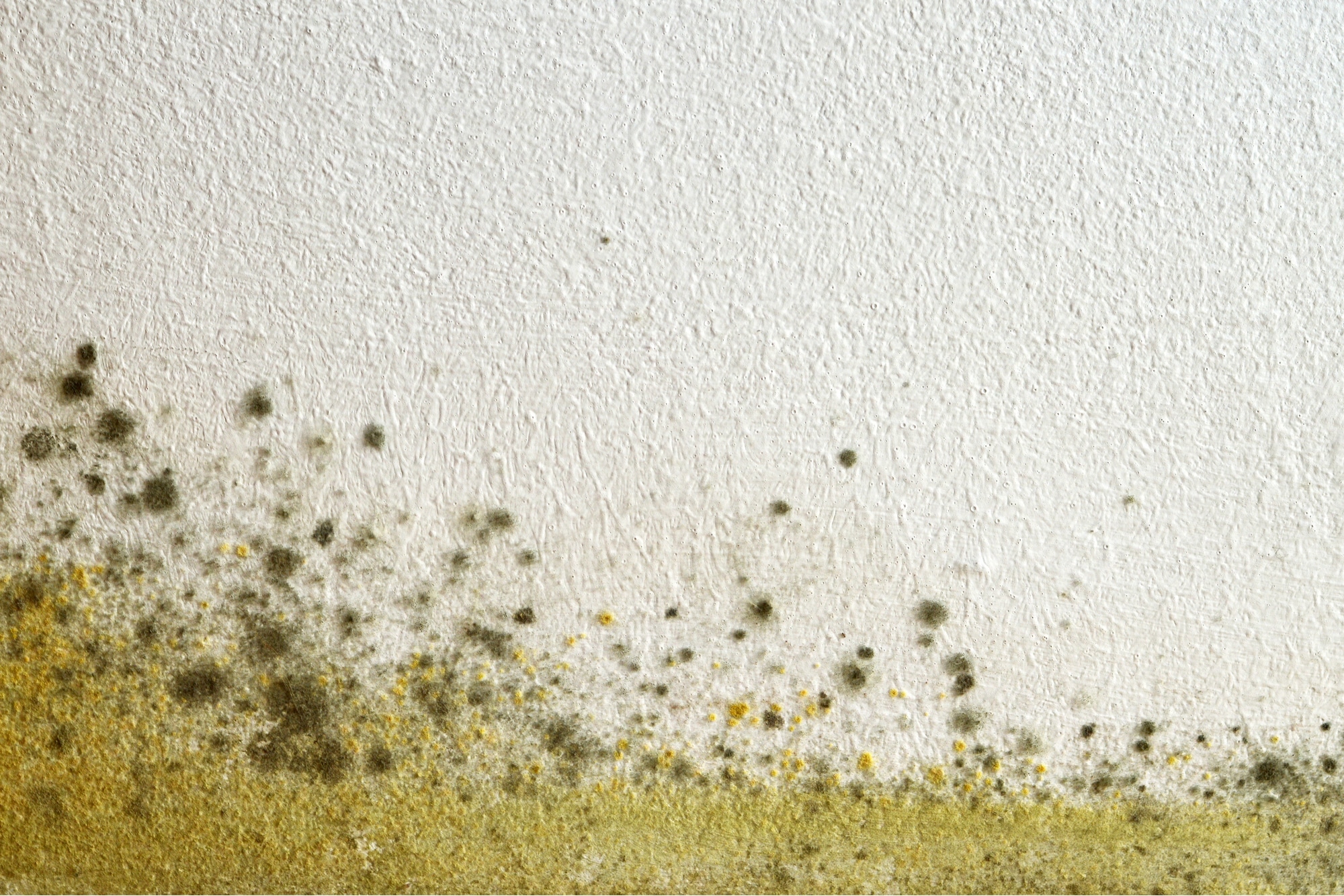
Black spots. That’s what Janet saw on the bathroom wall while she was cleaning mere days after closing on her Louisiana home. The small, speckled dots looked like mold to her. But her home inspector, George, had performed mold sampling and indoor air quality testing a month earlier and found nothing. Could it really be mold in her house?
Janet called George, and his receptionist said he wouldn’t be available to return her call for a few days. After hanging up, Janet considered waiting to talk to her inspector, but only for a moment. What if the spots were mold? What if there were more signs of mold in the home than the spots she saw on the wall? And what if the mold made her sick? She’d gotten sick from mold exposure before, which is why she had a mold inspection in the first place. She wasn’t taking any chances.
Another Professional Mold Inspector Enters the Chat

Section Summary: After discovering signs of mold in the walls and waiting to hear from her original inspector for a re-inspection, Janet hires a new home mold specialist. The specialist’s mold inspection report identifies mold in the house and recommends $8,500 to $10,800 in remediation costs.
One Google search and phone call later, and Janet had booked another home inspector, Brian, to perform another mold inspection. Brian identified mold on the bathroom wall, where Janet had seen it, around the HVAC registers, near the toilet tank, and on the ceiling of a second bathroom. In Brian’s own words:
“Highwater activity was noted due to thermal breaching and duct air leaking throughout the home as well as no spring-loaded dampers in the bathrooms. This, in turn, has allowed microbial growth,” Brian stated in his report. “The ceilings throughout the house were visibly painted over around most of the registers. The ceiling in the master bath also has visible swirls and discoloration around the ventilation fan as well as a circle of discolored paint nearby.”
While testing for mold in the house, Brian took swabs and air samples throughout common problem areas and of the two areas with visible signs of fungal growth. He sent those swabs to a lab, which reported light to moderate growth from the swab samples and low to high growth from the air samples.
Recommendations From the Mold Inspection Report
Brian submitted his findings in a 12-page mold inspection report accompanied by a 20-page report from the environmental lab.
Given the results of his home mold inspection, Brian recommended Janet remediate the mold in her house by:
- Removing and replacing the water-damaged and visibly microbial-contaminated sheetrock and other building material.
- Removing all visible microbes from porous materials and encapsulating the areas as needed.
- Air scrubbing and fogging the entire house with a broad-spectrum neutralizer and air scrubber.
- Installing spring-loaded dampers in both bathrooms.
- Sealing the air conditioning supply ducts at all register boxes.
- Increasing the air gap between the toilet tank and wall.
- Clearance testing after remediation.
Brian estimated that the mold testing and remediation above would cost between $8,500 and $10,800.

A $30,000 Mold Surprise: Mold in the House Leads to a Claim
Section Summary: The family moved back to Texas to escape effects of mold in the house while waiting for a re-inspection. George neglected to take proper photos, and the family demanded $30,000 for their mold remediation efforts.
Concerned for her health and safety, Janet and her family left their new home in Louisiana and moved in with family in Texas while remediation took place. They reached out to their original inspector, George, again and explained that another inspector had found mold in the house.
The family believed George should have been able to identify the mold during his inspection. Because he’d allegedly failed to do so, they wanted him to pay for remediation.
Nearly two weeks later, Janet’s husband drove from Texas back to Louisiana to let George into the house for a re-inspection. A few days later, George called Janet asking to see the house again because he hadn’t taken photos. But by then, Janet’s husband was back in Texas and unable to return.
They demanded George cover $30,000 in mold remediation, testing, and subsequent repairs. That’s when George submitted the claim to us, his insurance provider.
Defending the Mold-in-the-House Inspection Claim

Section Summary: Because the mold inspection was limited, InspectorPro’s claims team denied liability. They insisted the inspector was not responsible for missing signs of mold in the home. Thanks to the inspector’s limitation of liability and dispute resolution contract provisions, he only paid $1,400 for his deductible after settling.
Our claims team submitted a denial of liability letter to Janet. Citing George’s pre-inspection agreement and the Louisiana State Board of Home Inspector’s scope, our team argued that George had identified what he could with a limited, non-invasive mold and home inspection. His inspection could not predict future mold growth, we argued, so he should not be blamed for finding mold in the house later.
Because Janet discovered signs of mold in her home only a month after George’s inspection, and because George didn’t have anything in his contracts describing the limitations of indoor air quality testing, we offered to settle for the limitation of liability in George’s agreement, which was two times the inspection fee ($1,400).
Janet was not happy with the offer.
“Had George reported any mold in any form to any extent in his report, we would have not moved forward on the purchase of the house and would not find ourselves in the situation that we’re currently in,” she wrote in a reply to our letter. “We have been discussing this matter with our attorney and qualified mold remediation inspector/witness at length, and while our preference is not to take this matter to court, we have prepared ourselves to do so.”
Settling the Mold-in-House Insurance Claim
Our claims team held their ground.
George’s pre-inspection agreement had a dispute resolution provision with an arbitration clause. That meant if Janet wanted to escalate this mold inspection insurance claim, she’d have to appear in front of an arbitrator–not a judge and jury. And while Janet was upset, she didn’t bring any new information proving George’s fault.
Our claims team, again, denied George’s liability and offered the $1,400 settlement.
Janet realized she didn’t have a case and reluctantly accepted the offer. After signing a release of all claims, which would prevent her from filing future claims against George, our team paid her the $1,400 settlement and closed the mold inspection claim. The inspector’s deductible was $2,500, but he only paid us the lesser amount of $1,400.
Before the Next Mold-in-House Claim: 5 Things Every Inspector Should Do
Section Summary: Whether your client accuses you of missing mold in the house or another ancillary service claim, having a strong pre-inspection agreement with proper ancillary service addendums, utilizing pre-claims assistance, performing thorough re-inspections, and carrying ancillary service endorsements can protect you from claims.
Having paid nearly $29,000 less than what Janet demanded, George was relieved. Without us as his insurance provider, George could have paid out much more to Janet or spent lots of money on his defense.
George was not at fault, and he did many things that helped his defense. But he did make some mistakes. Let’s learn from his wins and fails.
1. Have a solid pre-inspection agreement.

George’s pre-inspection agreement did a lot for his defense. By having Janet sign the contract prior to the residential mold inspection (as all clients should), George gave Janet time to read and accept the terms of his inspection services.
Once Janet did lodge a complaint against George, the limitation of liability and dispute resolution provisions in his contract also helped set realistic parameters for her complaint.
First, the limitation of liability provision capped the maximum recoverable amount to two times the inspection fee. Even if George had been found liable to his client for the mold-in-house inspection claim, the limitation of liability made it clear that he couldn’t be held accountable for tens of thousands of dollars more than he’d charged for his services. It also gave our team a generous but pragmatic settlement to offer when George didn’t meet Janet’s expectations for his services.
Second, George’s agreement had a dispute resolution provision with an arbitration clause. This prevented Janet from taking him to court, which would have cost them both more time and money. Janet may have chosen the settlement either way, but the arbitration provision still helped prevent the issue from escalating more than it needed to.
You, too, can have an agreement that’s there for you and your client when you need it most. Here at InspectorPro, we give every client access to our model pre-inspection agreement at no additional cost. It contains all the provisions you need to communicate clearly and effectively with your clients and defend your inspection business from meritless or exaggerated allegations. It also incorporates state and case law to stay compliant and relevant.
Learn more about our agreements here.
2. Utilize addendums for additional services.
When you’re performing a standard home inspection, you exclude a lot of ancillary services. So when you add a service like mold sampling to your inspections, you have to remove that exclusion and add the scope of the new service back in. Doing so is imperative to having adequate insurance coverage for mold claims like this one.
The easiest way to do that is with a separate contract or addendum. In this mold inspection claim, George did well by tailoring his mold inspection scope, but he neglected to include an air sampling agreement before evaluating potential mold in the house.
The Mold Sampling Agreement
George followed this best practice when he had Janet sign his standard pre-inspection agreement and a mold sampling agreement. In his mold agreement, he explained that his mold inspection would be visual, non-invasive, and not technically exhaustive.

In this case, explaining the limitations of his mold sampling scope in his mold disclaimer were crucial for several reasons:
- By stating the inspection was visual, George made it clear that he was only accountable for what was visually present that day. During his initial inspection, there were no black dots of mold or other signs of mold on the walls for him to see, so he couldn’t report them.
- His scope acknowledged that mold might exist in inaccessible areas, such as behind walls, and that his testing would not identify that mold. This was particularly important because Brian, the home mold specialist, inspected by a different set of standards than a home inspector would. Unlike George, he’d drilled a hole in the wall to take some of his samples. To say that George should have been able to find what Brian did, then, was like comparing apples to oranges.
- By stating the inspection was not technically exhaustive, George’s mold disclaimer left room for mold in the house that he did not identify because it was in a place he didn’t sample. While George didn’t test around the supply and wall register, Brian did, which explains why Brian found mold where George did not.
The Missing Indoor Air Sampling Agreement
But George took a misstep: His mold inspection contract didn’t say anything about indoor air sampling, and he didn’t use a separate contract or addendum for air sampling, either. This meant that his air sampling was up for debate.
The purpose, scope, methods, exclusions, and limitations of George’s indoor air sampling service weren’t agreed upon ahead of time in writing. This made it difficult to defend the quality and validity of George’s sampling.
With multiple areas of mold in the house confirmed so shortly after his inspection, it’s possible George wasn’t as thorough in his own air sampling. His report was also not nearly as detailed as Brian’s, which supported this argument. Had Janet signed an indoor air sampling agreement detailing George’s service, it would have been less likely to be a point of contention.
Takeaway for Inspecting Homes for Mold (and Other Ancillaries)
So when you add ancillary services to your home inspections, remember to clarify your scope and exclusions with an additional contract or addendum.
For more information on how to do that, read our article on separate contracts for separate services.
3. Use pre-claims assistance.
This mold inspection claim didn’t go from zero to a $30,000 demand overnight. And in the interim, George could have used pre-claims assistance to deescalate.
Pre-claims assistance gives you professional help addressing client complaints that haven’t become written demands for money or full-fledged lawsuits—all at no additional cost. By responding to client concerns early, pre-claims assistance helps you come to a resolution before you have a claim.
Had George used pre-claims assistance, he could have received valuable help addressing Janet’s allegations before she believed George was negligent and responsible for her remediation and repairs. With this assistance, he may have been able to respond to Janet’s complaint and suggest next steps to help her feel empowered, without needing a refund.

4. Perform prompt and thorough re-inspections.
When you receive a complaint or claim, it’s always wise to revisit the property. Re-inspecting gives you the opportunity to see the defects and document them yourself. It also demonstrates goodwill to your clients by showing that you take their concerns seriously and want to investigate.
While it’s great that George went back to the property, he could have improved his approach. After Janet called concerned about the signs of mold in her home, it took George almost a month to re-inspect. That’s a long time for the client to fester and for the potential problem to get worse.
During that time, Brian had already performed an additional inspection, and Janet had moved across state lines. Had George gone out sooner, he could’ve made the client feel more cared for. He also could’ve better documented the mold issues Janet was seeing at the time she called.
Speaking of documentation, George also failed to get his own photographs of the mold during his re-inspection, which could have captured early signs of mold in the walls. This was a huge oversight because it left the claims team to rely on pictures Janet provided. Had George taken photos himself, it would have been easier to compare the photos from the original inspection to the re-inspection and defend him.
So always re-inspect as quickly as you can, and don’t forget to take copious amounts of pictures.
5. Carry the mold endorsement (even if you don’t inspect for it).
It may seem counterintuitive to pay for mold inspection insurance if you don’t perform mold inspections. But non-performance is not protection.
When it comes to insurance and mold claims, mold is the fourth most common type of errors and omissions (E&O) claim against home inspectors. And most mold damage lawsuits aren’t because they performed poor sampling, as Janet accused George of doing. They’re for not identifying mold at all.
Most insurance policies have mold exclusions, meaning you don’t have coverage for mold inspection claims unless you carry a mold endorsement. Having the endorsement ensures you have the legal defense and indemnity you need if a mold claim comes knocking.
Learn more about how insurance endorsements protect your inspection business here.
Preventing Mold-in-the-House Claims: Don’t Wait Until Things Get Spore-y
Can you be sued for mold that wasn’t there? One inspector almost was.
An ironclad agreement with addendums, pre-claims assistance, and thorough re-inspections can prevent mold claims. But make sure you’re protected in case an unexpected claim still strikes.
Regardless of whether you offer mold inspections, get endorsements for mold and other common claims to prevent mold in the house from growing into a legal nightmare. Talk to your broker about adding individual endorsements or a bundle today.